
By Antonia Lopez

As Trevecca’s student body has become more culturally and politically diverse, university leaders are finding new ways to create space for meaningful conversation—especially as students navigate an election year marked by polarization and division.
Trevecca’s chapel team emphasized this approach when choosing the chapel theme for the 2024-25 school year, “Fix Your Eyes,” based on Jesus’ “I am” statements throughout the Gospels.
“The choice of the theme was very intentional this year, knowing that there were going to be a lot of resources that were thrown at the purpose of getting us to be as divided and hateful as possible,” said Erik Gernand, university chaplain. “I really wanted to set the tone of the year in terms of, let’s fix our eyes on Jesus and spend time exploring his life and teaching and character and ministry because it’s his life that is the one that’s supposed to be shaping and forming us.”
Justin Jose, director of leadership and community engagement, said the connections created with students through his job in student development are the first step toward opportunities to talk about hot-button topics–like politics.
“I really think ultimately it boils down to how we engage students relationally, and when we can build trust with students, [we can] begin to dig into some of those deeper questions and harder conversations,” said Jose.
Amanda Staggenborg, vice president of communications for the Council for Christian Colleges and Universities, acknowledged the increase in political engagement and student participation occurring on CCCU campuses.
“It’s really a wonderful thing to see. I always like to say that this current generation of undergraduate students is probably the most politically active, very much an activist generation, where they give opinions about what they want to learn about, they want to tell their political leaders the issues that they care about and the things that are impacting them and affecting them for their future,” said Staggenborg. “That is something that we haven’t seen as much in previous administrations, but it’s definitely encouraged because the students are the ones who are the most impacted by any kind of curriculum or program change.”
As the first election year post-pandemic, Gernand said he knew the campus community needed a space to have hard conversations, as political divides have continually led to a split among Christians. He emphasized the importance of teaching students the skills necessary to have respectful dialogue with people who hold different views.
“Last semester, we spent quite a bit of time on [the chapel theme], in part because there was an election season, but the way we went about it was to try and build foundations through the Bridging the Gap model that would become skills that we can use in all sorts of conversations as we go through life together,” said Gernand. “I think those aren’t just important for us to have in times of election seasons, but just anytime we come into an area where we’ve got a different viewpoint or perspective or disagree with somebody on a point or an issue.”
Melissa Colorado Origua, the student Director for Inclusion and Belonging for the 2024 to 2025 school year, acknowledges the importance of understanding diversity when discussing politics.
“When we see diversity in politics, I think we should be more mindful when we talk about them, because it’s not an us versus them or them versus us. Policy should be for the welfare of everyone. It’s not just for one person, it’s not just for one group, because then that’s an oligarchy that’s not democracy, and everyone should have the right to see themselves represented,” Colorado Origua said.
Jose and other members of Trevecca’s faculty organized an event to practice the conversation tools provided by Bridging the Gap by discussing how Christians and politics can coincide.
Bridging the Gap is a curriculum created by Interfaith America and was first brought to Trevecca’s campus by Jon Burch, a management professor and Jonathan Bartling, Trevecca’s vice president of student affairs and accreditation. Interfaith America is an organization set to inspire, equip and connect leaders and institutions to unlock the potential of America’s religious diversity, according to their website.The curriculum equips participants with tools to have respectful and honest conversations without creating division.
Faculty members are using a grant provided by Interfaith America to integrate the Bridging the Gap curriculum into classes, events, and now, a club.
Amy Smith, associate professor of psychology, points out the importance of the skills obtained by using Bridging the Gap, and her hopes for students who participate in the club next fall.
“Bridging the gap is helpful in increasing listening skills for people that need to do that. And not only [listening to] things we disagree with, but just listening to listen rather than to speak,” said Smith. “On the flip side, teaching, coaching, encouraging people to use their own experience and storytelling to engage in these conversations, not feeling like they have to have it all figured out, but that they have something valuable to contribute to the conversation just from where they’re coming from. I think those are two things that I’m hoping will help students connect better on campus.”
The announcement of the Bridging the Gap Club, sponsored by Smith, was made on March 28 during the Christians and Politics event organized by Jose and other faculty members. Alessandro Romero, a Trevecca student, announced the creation of the club and passed around a sign-in sheet for students to sign up if they were interested. The club is not official yet but is awaiting approval from the Student Government Association, according to the club’s Instagram page, @btg_tnu.
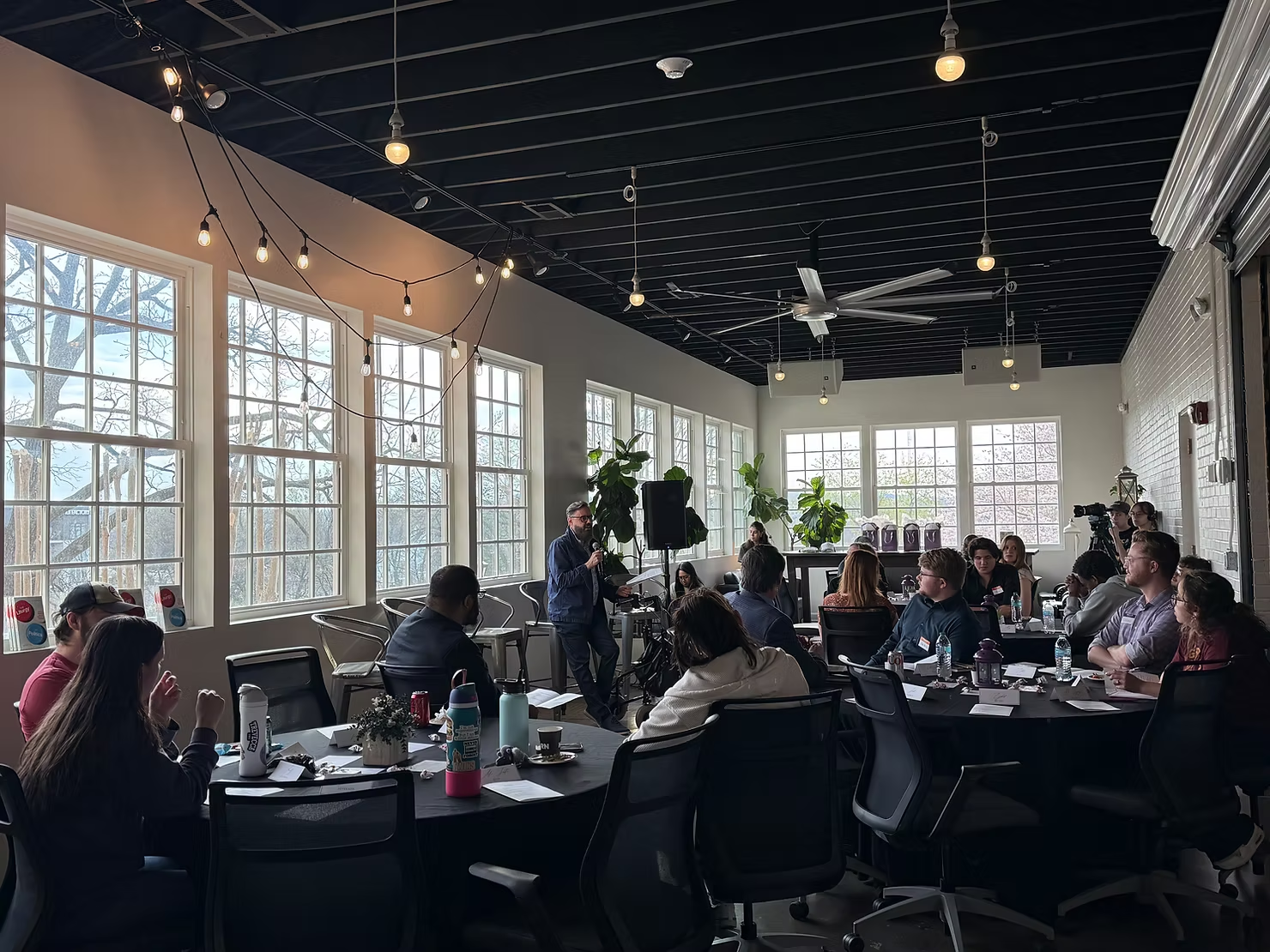
Jose acknowledged that Trevecca has done well creating spaces for students to voice their concerns, from student roundtables to various panels addressing immigration and politics, but also recognized that there is still room for improvement.
“I think we can try and be more proactive in ways that we are engaging hard, possibly divisive or inflammatory topics and situations,” said Jose. “It’s not necessarily us having to take a partisan side. I don’t think we necessarily need to do that. But I think Trevecca has a belief in a motto of leadership and service. There are ways that we can try and continue to live in that, and I think we’ve done that in some ways. Obviously, we can always do better.”
Discover more from TrevEchoes Online
Subscribe to get the latest posts sent to your email.